


At-Home Dental Care For Pets That Actually Works
Dental home care is one of those topics that sounds simpler than it is in practice. Brush daily. Yes, but how? With what? Starting when a pet has never been handled around the mouth? The Tidmore Veterinary Hospital team has guided enough owners through the process to know that “here is a toothbrush” is not a useful answer on its own. The introduction matters. The product matters. And for owners who genuinely cannot make brushing work with a particular pet, knowing which alternatives, such as wipes, enzymatic gels, and select water additives, have real evidence supporting them is valuable information that most people never receive.
Tidmore Veterinary Hospital is an AAHA-accredited practice in Northport, AL, with a long history in the community and a full suite of veterinary services including professional dental care and practical at-home guidance. Contact the team to schedule a dental visit and come away actually knowing how to support a pet’s oral health between appointments.
Why Does Dental Home Care Matter So Much?
The short answer: dental disease is almost universal in adult pets, and much of it is preventable. Plaque, the soft bacterial film that accumulates on teeth, begins hardening into tartar within 24 to 48 hours. Once tartar forms, it can no longer be brushed away. It creates rough surfaces where more bacteria accumulate, inflammation develops at the gumline, and periodontal disease progresses from mild gingivitis to painful infection, tooth loss, and bone destruction.
The systemic implications go further. Bacteria from infected oral tissue enter the bloodstream and have been associated with changes to the heart, kidneys, and liver over time. Keeping the mouth healthy protects far more than just teeth.
Home care slows plaque accumulation between appointments. It does not, however, remove tartar that has already formed or address disease developing below the gumline. That is the job of professional dental cleanings under anesthesia, where the entire mouth may be scaled, polished, and radiographed safely. Home care and professional cleaning work as a team. Neither completely replaces the other.
Toothbrushing: Still the Most Effective Option
Why Brushing Beats Everything Else
Brushing works because it physically disrupts the plaque biofilm on tooth surfaces before it can harden. Daily brushing is the goal, but every-other-day brushing still provides significant benefit. Consistency matters more than perfection. A 30-second brush three or four times a week beats an elaborate routine that happens once a month.
How to Actually Get Started
The most common mistake is moving too fast. Pets that have never had their mouth handled need a gradual introduction, and rushing creates negative associations that are hard to undo. Cooperative care techniques built around patience and positive reinforcement make the difference between a pet who tolerates brushing and one who genuinely accepts it.
A practical progression looks like this:
- Touch the muzzle and lips regularly, rewarding calmly each time
- Lift the lip to briefly touch the outer surfaces of the teeth
- Introduce pet-safe toothpaste on a finger, letting the pet taste and smell it first
- Progress to a soft-bristled toothbrush or finger brush, starting with the large canine teeth
- Gradually extend to premolars and molars, building duration over days to weeks
Never use human toothpaste. Fluoride and xylitol, both common in human products, are toxic to dogs and cats.
Brushing dog teeth is most effective when the brush is held at a 45-degree angle to the gumline and worked in small circular motions. The outer surfaces of the upper teeth accumulate the most tartar and are the priority. Positioning a dog beside you rather than facing them reduces stress and gives better access.
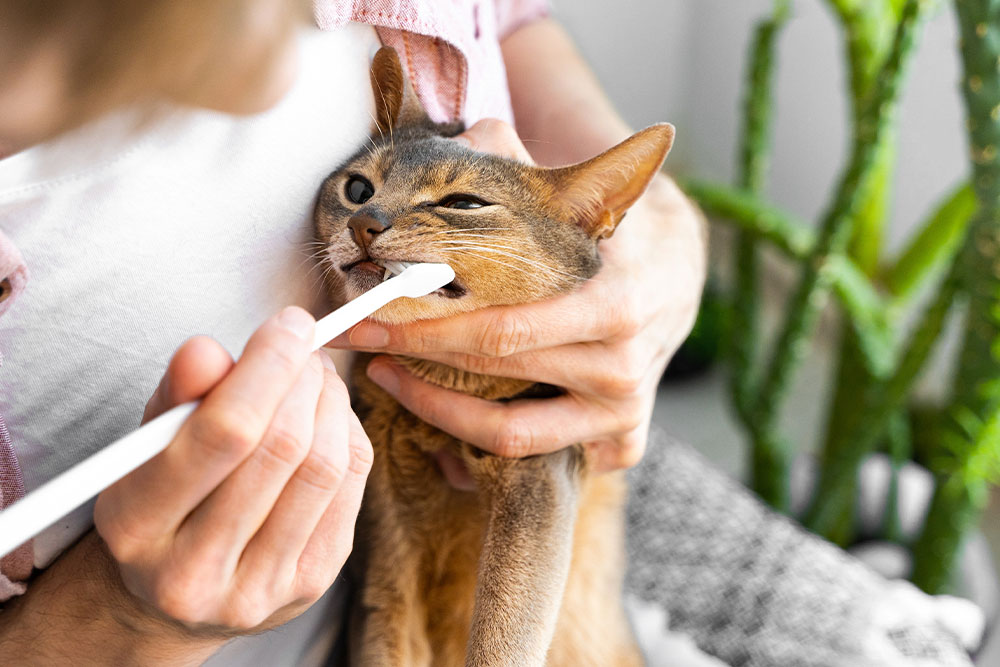
For cats, the approach is quieter and quicker. Brushing cat teeth requires a smaller brush or finger brush, gentler pressure, and very short initial sessions. Most cats tolerate brief contact on the outer surfaces of the upper canines and premolars; aiming for those areas daily is a meaningful start. our team is happy to demonstrate technique at a dental appointment for any owner who wants a hands-on walkthrough.
How to Read the VOHC Seal
The Veterinary Oral Health Council (VOHC) is an independent organization that reviews manufacturer-submitted clinical trial data and awards a seal of acceptance to products that demonstrate measurable reduction in plaque or tartar. A product carrying a VOHC seal has been tested and shown to work, which is more assurance than most pet dental products can offer.
VOHC-accepted products span toothpastes, water additives, chews, dental diets, and oral gels. The seal is voluntary, so not every effective product has been through the process, but when you’re standing in a pet store aisle confronted by dozens of options, the VOHC seal is a reliable shortcut to products worth the investment. our team can recommend specific VOHC-accepted products during any dental appointment.
Dental Wipes and Gauze: A Legitimate Alternative
For pets who genuinely resist a toothbrush, dental wipes or a square of gauze wrapped around a finger provide plaque removal through friction on accessible tooth surfaces. They are easier to introduce than a brush for some cats and anxious dogs, and they work well on the front teeth and outer surfaces of canines and premolars.
The limitation is reach. Wipes do not get behind teeth or down into the gumline the way brushing can, and they are less effective on the back molars where tartar often accumulates. That said, wipes with an enzymatic solution added provide both mechanical and chemical plaque disruption, which improves their usefulness. For some households, wipes are the long-term solution. For others, they are a bridge toward eventually tolerating a brush.
Enzymatic Gels, Spray, and Powders: Chemical Backup
Enzymatic dental products break down plaque chemically by targeting the bacterial biofilm. Some are applied with a brush or finger; some can be sprayed on, or put on food; others are formulated for the pet to lick off a fingertip and spread through natural tongue movement. No rinsing is needed for most.
These products work even without brushing, though the combination of enzymes plus mechanical action is more effective than either alone. Look for VOHC-approved items containing glucose oxidase, lactoperoxidase, or other enzymes listed on the label, rather than products that simply promise fresh breath through flavoring. When our team recommends dental products during an appointment, they can walk owners through which ones have evidence behind them and how to apply them correctly for a specific pet’s anatomy.
Water Additives and Oral Rinses: Where Do They Fit?
Water additives dissolve into the drinking water and deliver antimicrobial or enzymatic ingredients through normal drinking. The appeal is obvious: no handling, no resistance, minimal effort. The limitation is that they cannot remove existing tartar and are unlikely to reach all tooth surfaces effectively. Effectiveness varies considerably between products.
They are most useful as a supplement to a broader routine, or as a low-friction starting point for owners whose pets currently receive no dental care at all. Introduce additives gradually by mixing a small amount into the current water, increasing over several days, and monitoring that the pet continues drinking normally. If a pet refuses water with an additive, try a different product or discontinue. Hydration always takes priority.
Do Dental Diets Work?
Dental diets are prescription or over-the-counter foods specifically formulated to reduce plaque and tartar. They work through two mechanisms: larger kibble size and specific fiber matrix that causes the tooth to contact more of the food surface during chewing, and added ingredients that inhibit tartar mineralization. They are not a replacement for brushing or professional cleaning, but they can meaningfully extend the time between cleanings for dogs who eat them consistently as their primary diet.
Choosing Dental Chews That Actually Help
Chewing is a natural behavior that scrapes plaque from tooth surfaces, and certain chews are formulated to enhance that effect. The challenge is that not all chews are safe. Dangerous chew items include real bones, antlers, hard nylon chews, and ice, all of which are hard enough to fracture teeth. The rule of thumb is that if a chew does not bend or give slightly under pressure, or if you would not want it hit against your own kneecap, it is too hard.
Look for safe chew toys and edible chews that carry the VOHC seal. Well-designed dental chew toys should flex under chewing pressure, be sized appropriately for the dog, and be given under supervision. Match the chew to the dog’s chewing style: light chewers benefit from softer options; strong chewers need something durable enough to last more than thirty seconds without becoming a swallowed chunk.
What Home Care Cannot Do
No amount of brushing, chewing, or rinsing removes tartar that has already calcified onto the tooth surface, and nothing reaches the tooth roots or detects disease hiding below the gumline. Anesthesia-free dental risks are significant: without anesthesia, scaling is limited to visible surfaces only, the mouth cannot be probed or radiographed, and a moving, stressed pet cannot be examined safely or thoroughly. Anesthesia-free dentistry looks cleaner but does not treat the disease that causes the most damage.
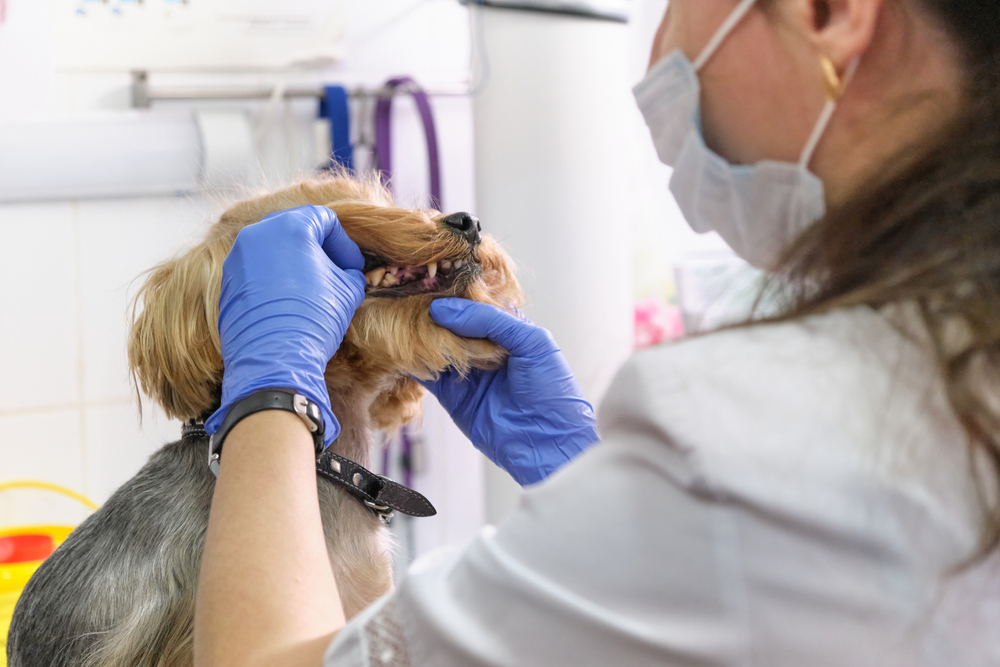
Professional cleanings under anesthesia at Tidmore include scaling above and below the gumline, polishing, dental radiographs, and a full oral exam. Most pets need a professional cleaning annually, though some breeds and individuals with heavier tartar buildup benefit from every six months. Others can go several years between cleanings, especially if home-care products are being used. Request an appointment to discuss your pet’s current oral health and the right schedule for them.
Building a Routine That Sticks
Consistency is the goal, not perfection. A few practical strategies that help:
- Attach dental care to an existing daily habit, such as right before the evening meal or at bedtime
- Keep supplies somewhere visible so the habit doesn’t get skipped
- Start with whatever level the pet tolerates and build from there; a 20-second wipe is a better foundation than an ambitious routine that fails
- Celebrate progress, fresher breath and less visible tartar are signs the effort is working
- Have a backup plan: On days you don’t brush, give dental chews or use wipes. Having a few products on hand makes doing something easy every day.
If a pet is resistant, our team can help troubleshoot, whether through technique coaching, a product change, or a conversation about whether anxiety management could help make handling easier. Dental care does not have to be a battle.
Good Oral Health Is Worth the Effort
Every layer of home care, brushing, wipes, gels, VOHC-approved chews, adds up. The goal is to slow plaque accumulation, reduce the pace of tartar formation, and keep the mouth healthy enough that professional cleanings are maintenance rather than repair.
The Tidmore Veterinary Hospital team is here to make that realistic for you and your specific pet. Contact the team to schedule a dental exam, get a product recommendation, or have a proper brushing demonstration. You are truly family here, and that includes helping you build the kind of home routine that makes a difference.

Leave A Comment